
The global minimally invasive sacroiliac joint fusion (MIS Sacroiliac Joint Fusion) market has become, in recent years, one of the fastest-growing segments within the spine implants market. This growth is mainly driven by the high prevalence of chronic lower back pain associated with sacroiliac joint dysfunction, a condition that was historically underdiagnosed but is now increasingly identified thanks to improvements in clinical evaluation and diagnostic criteria.
What is the market?
The MIS sacroiliac joint fusion market is currently valued at around USD 900 million, with compound annual growth rates ranging between 5% and 15%.
This growth is driven not only by the increasing prevalence of this pathology, but also by the growing use of minimally invasive surgical procedures, which allow for better clinical outcomes, faster postoperative recovery, and lower overall costs due to reduced hospital stays.
Geographically, North America leads the global MIS SI joint fusion market, driven by advanced healthcare infrastructure, high specialist awareness, and favorable reimbursement conditions. Europe follows with steady growth supported by an aging population, while the Asia-Pacific region shows the strongest growth potential due to increasing healthcare spending and wider adoption of advanced medical technologies.
Despite its positive outlook, the MIS SI joint fusion market faces challenges such as differences in reimbursement policies, the need for long-term clinical evidence, and the learning curve of advanced surgical techniques.
Why, despite its many advantages, has its use not yet become widespread?
In recent years, sacroiliac fixation devices have not gained the widespread popularity initially anticipated, despite the high prevalence of sacroiliac joint pain. This is largely due to diagnostic challenges, variable clinical outcomes, and biomechanical concerns.
- Sacroiliac pain often mimics lumbar or facet joint pathology, and imaging studies are frequently inconclusive, while diagnostic blocks can yield false positives. As a result, patient selection—a key factor for successful outcomes—remains difficult, limiting confidence in permanent implants.
- Clinical results are inconsistent, with some patients experiencing only partial or minimal relief, and complications such as implant malposition, persistent pain, nerve irritation, or nonunion occasionally requiring revision.
- Furthermore, conservative or minimally invasive treatments, including targeted physiotherapy, injections, or radiofrequency, are effective for many patients, reducing the need for surgery.
- Biomechanically, the sacroiliac joint plays a crucial role in load transmission between the spine and pelvis, and its fixation may alter pelvic dynamics, potentially shifting stress to other segments. Consequently, sacroiliac fixation is used selectively and remains primarily reserved for carefully chosen patients after conservative measures have failed.
What are the competitors?
From a competitive perspective, the market is dominated by a group of leading medical device companies, including SI-BONE, Medtronic, Globus Medical, Genesys Spine, and Orthofix, along with other specialized players and regional manufacturers. Below is a list of more than 60 competitors:
Featured:
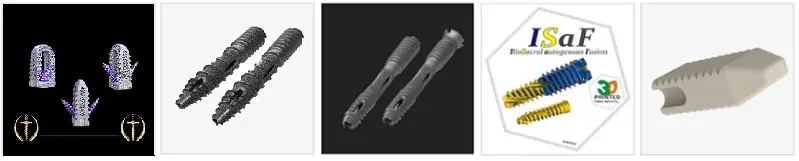
- Eminent Spine’s 3D Printed Titanium Posterior SI System (Eminent Spine)
- SIros O™ 3D Printed Oblique Sacroiliac Joint Fusion (Genesys Spine)
- SIros™ 3D Printed Lateral Sacroiliac Joint Fusion (Genesys Spine)
- ISaF IlioSacral autogenic Fusion (LfC)
- Posterior SI Allograft System.SIrten™ Allograft (Genesys Spine)
Others:
- Blue Topaz SIS
- Blue Topaz™ CompresSIve Sacroiliac Screw System
- Catamaran™ Sacroiliac Joint Fixation System
- CornerLoc™ SI Joint Stabilization System
- DIANA
- Entasis Sacroiliac Joint Fusion System
- EVOL-SI
- FIREBIRD™ SI Fusion System
- iFuse Bedrock Granite
- iFuse Implant System
- Integrity-SIFusion System
- Liberty SI™ Fusion System
- LinQ™ Sacroiliac Joint Fusion System
- M.U.S.T. SI Joint Screw System
- NADIA Sacroiliac Joint Fusion System
- NEXXT MATRIXX SI Helixx
- NEXXT MATRIXX SI Impaxx
- Orion Sacroilliac Joint Fusion System
- panaSIa Expandable sacroiliac (SI) fusion implant
- PathLoc-SI
- Patriot SI™
- PROLIX
- PSIF system
- RE-LIVE Implant
- Reunion Sacroiliac (SI) Joint Fusion System
- RIALTO™ SI Fusion System
- Sacrix Sacrofuse system
- Sambascrew System
- SenCho
- SI (Sacroiliac) Screw. Zavation
- Siber/ Ti Sacroiliac Joint Fusion System
- SiCure™ Sacroiliac Fusion System
- SI-DESIS
- SIFIX Intra-Articular System
- SiJoin
- Silex Sacroiliac Joint Fusion System
- SiLO TFX™ MIS Sacroiliac Joint Fixation System
- SI-LOK® Sacroiliac Joint Fusion System
- SI-LOK® SELECT Sacroiliac Joint Fixation System
- SiLO™
- SI-LUTION® Sacroiliac Joint Fusion System
- SImmetry Sacroiliac Joint Fusion System
- SImpact Sacroiliac Joint Fixation System
- SInapse™ SI Posterior Lateral System
- SI-Restore® Sacroiliac Joint Fixation System
- SOLACE™ Sacroiliac Fixation System
- T-FIX 3DSI Joint Fusion System
- The BowTie System
- TiLink-L
- TiLink-P fusion system
- TransFasten
- TransLoc 3D™ SI Joint Fusion System
- Trellis™
- TriCor Sacroiliac Joint Fusion System
- Trident™ Sacroiliac Joint Fusion System (Patent Pending)
- TRITON™ Sacroiliac Joint Fixation System
- Unio SI Joint Fusion Unity
- VERTICALE® SI Fixation
- VYRSApro™ SI Joint Fusion System
###
All video parts, images and documents related to the products are of the sole property of the different companies.All the information is for Educational purpose only! No copyright infringement intended.We encourage you to contact us if you have any comment, suggestion or if you want us to include/remove your videos, images or brochures. Please contact us: spinemarketgroup@gmail.com